MERKHET
Hire the crews. Haul the stone. Raise your god's pyramid before the Nile floods.
The Valley
Five pyramids.
One river. No god neutral.
The west bank of the Nile, built stone by stone. Stonecutters work the quarry by torchlight, sledge teams drag blocks to the ramps, masons lay them course by course — and every crew you hire appears here, working.
The Houses
Five gods.
Five blessings.
Each house builds for one god and inherits one blessing — faster masons, cheaper hires, richer quarries, longer nights, or a stronger star. Your works only ever raise that god's pyramid.
The Pyramids
Forty courses
to the capstone.
Every pyramid is drawn from the same model that stands in the valley. The first course needs 24 stones; each course higher needs more, because every block has to be dragged further up the ramp.
How it works
Three crews.
One chain.
Stone moves in one direction: cut at the quarry, dragged to the ramp, laid on the pyramid. Every stone laid pays you deben — the gold you spend to hire more hands.
Stonecutters
Cut limestone blocks out of the cliff. Start by cutting by hand, then hire cutters and the quarry runs on its own.
Sledge teams
Drag each block from the quarry to the foot of the ramp. Too few teams and cut stone piles up at the quarry.
Ramp masons
Carry blocks up the ramp and set them in the course. Every stone they lay pays deben.
Your pyramid only rises as fast as your slowest crew. The game marks it in red — hire there next.
Every few courses a new tier opens. Master one of two — copper chisels or wet-sand sledging, a straight ramp or a zigzag one.
Sandstorms, strikes, granite barges, the vizier's inspection. Twenty seconds to decide: pay to stay safe, or gamble.
Every few minutes a bright star rises over your pyramid. Click it and every crew works 2× for a minute.
Three missions a day for extra deben. Come back on consecutive days and your streak bonus grows.
Every stone you lay counts for your god's house. The tallest house when the weekly flood comes wins the week.
The Courses
Height is the
only score.
No rarity, no luck tables. A house is exactly as tall as the stones its builders laid. Four milestones change how its pyramid stands in the valley.
Obelisks raised
The red granite obelisks at the avenue gate are capped in gold.
Pylon banners
House banners go up on the temple pylon. The pyramid is visible from the far bank.
Casing stones
White Tura limestone casing starts at the base. The steps begin to vanish.
The benben
The gilded capstone is set. The house waits for the flood.
The Flood
Capstone, then
the flood.
Set the capstone and the Nile floods. The valley is washed clean, a new season begins — and your house keeps a permanent blessing that makes every crew stronger.
Swear
Choose one god. Their blessing shapes your whole economy.
Open · practiceHire
Balance cutters, haulers and masons. Fix the bottleneck, again and again.
Open · practiceRaise
Close forty courses and set the gilded capstone.
Open · practiceFlood
The Nile washes the valley clean. You start again with +25% on every crew, forever.
Open · practiceThe practice season runs in your browser against fixed demo heights for the rival houses. The shared, on-chain season — and what the winning house receives — will be published here before the contract address appears.
The Token
The stone the valley
is built from.
$MERKHET launches on a Pons bonding curve on Robinhood Chain and graduates into a locked Uniswap V4 pool. Until the address is shown in the card at the top of this page, nothing here is on-chain.
Merkhet · the star-sighting tool
Robinhood Chain · via PonsLink your wallet and the game reads your $MERKHET balance on Robinhood Chain — no transaction. Every crew works faster: +10% / +25% / +50%.
In gameThe creator fee on every trade fills the flood treasury. Each Sunday at 17:00 UTC the top builders of the winning house split it in ETH, by stones laid.
WeeklyEvery stone you lay counts for your god's house — together with every other builder sworn to that god.
LiveThe Records
What has been built.
And what has not.
Everything the valley has actually done, and everything it has not yet. The ledger stays short until the token launches.
Release status
- The valley, five pyramids and the colossi
- The pyramid tycoon (practice season)
- Season and flood rules published
- Token launch via Pons
- On-chain allegiance and sightings
Ledger
Questions people ask
How do I play?
Pick a god, tap “Cut stone” a few times, then spend the deben you earn hiring stonecutters, haulers and masons. Always hire for the crew marked bottleneck. Close forty courses to set the capstone.
What is a merkhet?
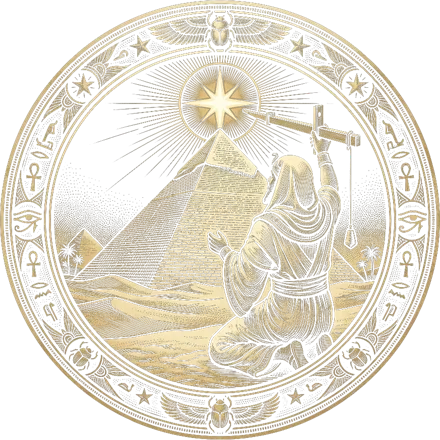
An ancient Egyptian sighting tool — a slotted bar and a plumb line. Builders lined it up with the pole star to set the pyramids square to true north. In the game it gives its name to a late technique, and the pole star it pointed at still rises over your pyramid — click it and your crews work twice as fast.
Is anything on-chain yet?
No. The practice season runs entirely in your browser. Nothing is on-chain until the contract address appears in the card at the top of this page and is posted from the official accounts.
Is the race real?
Yes. Every stone you lay is added to your god's house, together with every other builder sworn to that god. The race resets with the flood every Sunday at 17:00 UTC.
Does my god matter?
Yes. Osiris lays faster, Anubis hires cheaper, Ra quarries more, Isis keeps working longer while you are away, and Horus turns the pole star into triple production.
What does holding $MERKHET do?
Two things. Your crews work faster (the holder bonus, read from your wallet balance — no transaction needed), and only holders can share the weekly flood prize when their house wins.
How is the flood prize paid?
A share of the creator fee from $MERKHET trades goes to a public treasury wallet. After each Sunday flood, the prize is split between the top builders of the winning house who linked a wallet at least 24 hours before the flood and hold the minimum. Every payout is sent on-chain and listed here. Prize size is set each week and depends on trading volume — nothing is guaranteed.
Can people cheat the race?
Your works run on our server, not in your browser — the browser only sends what you do (hire, build, choose), and the server checks every action. Editing numbers in your browser changes nothing. Taps are rate-limited, one wallet counts for one builder, and wallets linked at the last minute do not qualify.
Can I lose money?
Yes. $MERKHET is a memecoin with no promise of value. Only use what you can afford to lose.